Posted on 9/25/2026
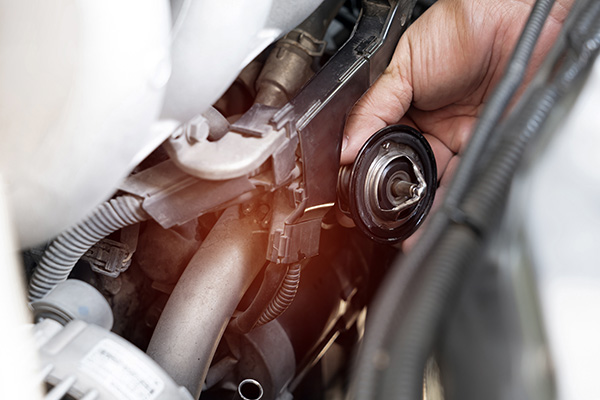
After twenty or thirty minutes of driving, your engine should be fully warmed up, and the temperature gauge should settle near its normal position. If the needle stays close to cold, barely moves, or drops while you are cruising, the engine may not be reaching the temperature it was designed to run at. That does not create the same urgency as an overheating engine, but it still deserves attention. Engines that consistently run too cool can use more fuel, produce weak cabin heat, build up more moisture inside the oil, and sometimes turn on the check engine light. The key is figuring out whether the engine is actually cold or the gauge is simply giving you bad information. A Thermostat Stuck Open Is the First Thing We Suspect The thermostat blocks coolant flow to the radiator while the engine is warming up. Once the coolant reaches the correct temperature, the thermostat opens and allows heat to move through the radiator. If it sticks open, coolant starts flowing thr ... read more
Posted on 8/28/2026
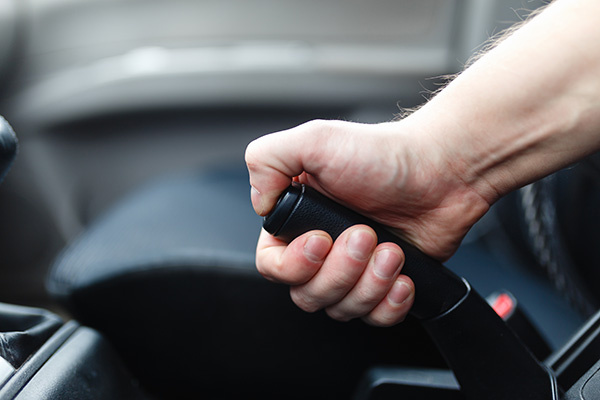
A parking brake should keep the vehicle from rolling after it is parked, especially on an incline. If you pull the lever, press the pedal, or activate the electronic parking brake and the car still moves, something in the system is no longer applying enough holding force. The cause can be as simple as a stretched cable or as involved as worn rear brake components or an electronic actuator problem. Either way, a parking brake that will not hold deserves attention. The system is an important backup to the transmission’s Park position, and it should be able to secure the vehicle without relying entirely on the transmission parking mechanism. 1. The Parking Brake Cable Is Stretched or Damaged Many mechanical parking brake systems use steel cables to connect the hand lever or foot pedal to the rear brakes. Every time the brake is applied, those cables are placed under tension. Over years of use, the cable can stretch slightly, reducing how far the brake mechanism m ... read more
Posted on 7/31/2026

A long road trip can feel twice as long when children become bored in the back seat. The first hour may go well, but eventually the familiar questions begin. Are we there yet? How much longer? Can we stop again? Screens can help for a while, but they are not the only way to keep everyone occupied. Simple car games give children something to focus on while helping the miles pass faster. The best choices require little or no equipment, work for different ages, and do not distract the driver. A few games prepared before leaving can turn a restless drive into part of the family experience. Play The Alphabet Game Using Signs And Vehicles The alphabet game is easy to learn and can last for quite a while. Players search for letters in order, beginning with A and continuing through Z. They can use road signs, business names, license plates, billboards, and lettering on trucks. The first person to reach Z wins, or everyone can work together as one team. Younger children can ... read more
Posted on 6/26/2026
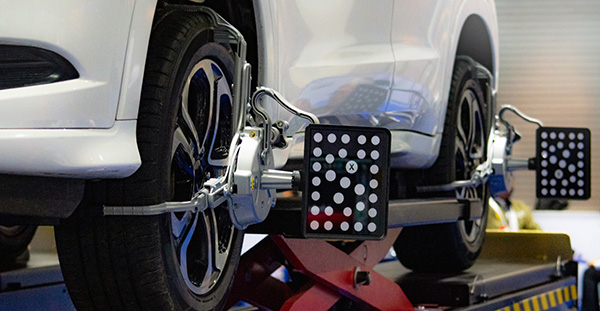
A crooked steering wheel can be easy to ignore at first. The car still moves straight enough, the tires may look fine at a glance, and nothing on the dashboard indicates a problem. Still, if the steering wheel sits off-center while you are driving straight, something has changed. Bad wheel alignment is one possible cause, but it is not the only one. Tire pressure, suspension wear, steering parts, road impact, and even previous repair work can all affect steering position. The key is determining whether the crooked wheel is an alignment issue or a warning sign of something else beneath the vehicle. Crooked Steering Wheel And Wheel Alignment Problems Wheel alignment controls the angles of the tires and how they meet the road. When those angles are off, the steering wheel may no longer sit straight while the vehicle is traveling in a straight line. You may find yourself holding the wheel slightly left or right just to keep the car centered in the lane. That off-center ... read more
Posted on 5/29/2026
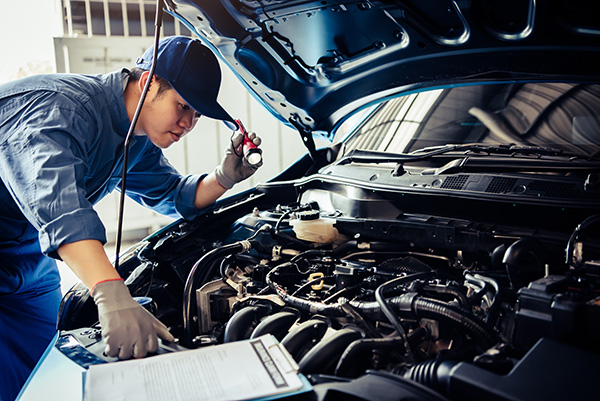
Summer is hard on cars in a quiet way. The engine runs hotter, the A/C works longer, tires heat up faster, and batteries get pushed by high under-hood temperatures. The car may feel normal in the morning, then struggle later in traffic when everything is heat-soaked. A summer checklist is not about overdoing service. It is about checking the parts most likely to complain when the weather, traffic, and road trips all pile on at once. Start With The Cooling System The cooling system is the first place to look before summer driving gets serious. Coolant level, hose condition, radiator performance, fan operation, thermostat behavior, and water pump leaks all decide whether the engine can stay at a safe temperature. Coolant does not vanish without a reason. If the reservoir keeps dropping, there is a leak, a pressure issue, or something deeper going on. We look for dried coolant crust, sweet smells after parking, damp hose ends, weak caps, and fans that are not switchin ... read more
Posted on 4/30/2026
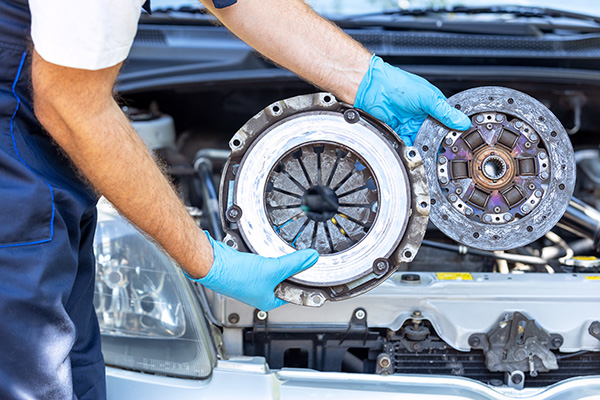
When a clutch is working the way it should, you barely think about it. The pedal feels right, the gears engage smoothly, and the car responds the way you expect. When something starts going wrong, though, it becomes hard to ignore. Maybe the pedal feels soft. Maybe shifting gets harder. Maybe the engine revs climb, but the car does not move the way it should. Those little changes can turn driving from enjoyable to frustrating in a hurry. At our shop, we know clutch problems can sneak up on drivers. Sometimes they start with one odd symptom that only shows up once in a while. Other times, the signs are obvious right away. Either way, the sooner a clutch issue gets checked out, the better. A small problem caught early can often save you from bigger repairs, extra wear, and more time off the road. Manual transmission vehicles have a loyal following for a reason. They are engaging to drive, give drivers more control, and ... read more
Posted on 3/27/2026
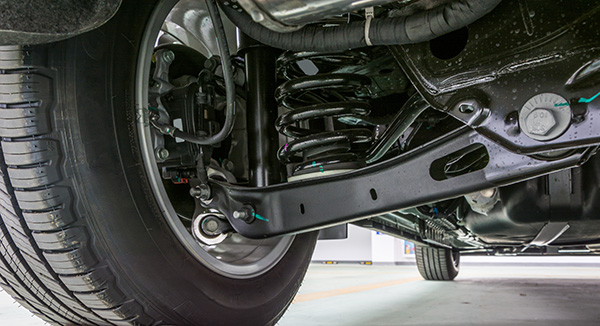
A thump over bumps is one of those noises that makes you tense up every time the road gets rough. It can start out as an occasional knock on a pothole, then turn into a repeat thud on speed bumps, driveway entrances, or uneven pavement. Because the car still drives fine most of the time, it’s easy to put it off. The truth is that a thump means something is moving more than it should. What A Thump Usually Means Versus A Rattle A thump is typically a heavier sound than a rattle. It feels like something is shifting, tapping, or bottoming out, and you may feel it through the floor or seat. A rattle is more of a light metallic chatter. That difference helps narrow the suspects. A thump that happens only on one side points toward a single worn component. A thump that seems centered can still be on one side, but it can also be an exhaust component contacting the body or a mount allowing extra movement. Suspension Bushings That Let Things Shift Sus ... read more
Posted on 2/27/2026
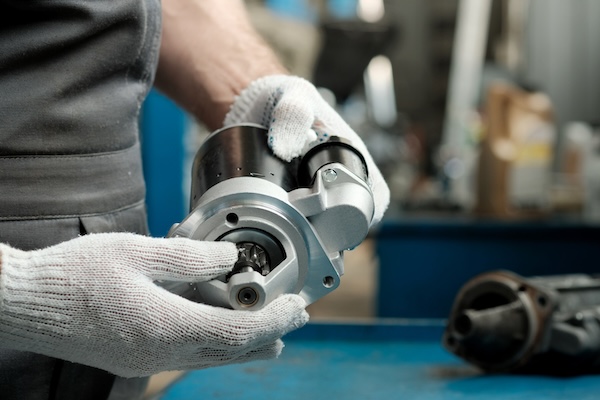
Few things are more frustrating than turning the key or pressing the start button and hearing nothing. When your vehicle refuses to start, the starter motor is often the culprit. While it may seem like a small component, the starter motor plays a critical role in starting your engine. Understanding how it works, the warning signs of trouble, and when to seek repairs can help you avoid being stranded at the worst possible time. What Is a Starter Motor and What Does It Do The starter motor is an electric motor that cranks your engine when you start your vehicle. When you turn the ignition key or push the start button, electrical power from the battery flows to the starter motor. The starter engages with the engine’s flywheel and spins it fast enough for the combustion process to begin. Once the engine starts running on its own, the starter disengages. Because the starter motor handles high electrical loads and mechanical stress, it naturally wears over time. Heat from the engine ... read more
Posted on 1/30/2026

A car can feel perfectly normal around town, then start to feel vague and unsettled once you are cruising at highway speed. You may find yourself making constant little corrections to keep it centered, or the vehicle may drift more than it used to when the wind hits, or you pass a larger truck. Sometimes it feels like the front end is light, even though nothing is obviously broken. That loose steering feeling usually comes from a few repeat offenders, and catching it early can save tires, reduce stress, and keep the car predictable in quick lane changes. Common Ways Loose Steering Shows Up At Highway Speed Loose steering often feels like a delay; you turn the wheel slightly, and the car responds a beat later. Some drivers notice the steering wheel does not self-center as smoothly after a gentle curve, so they end up guiding it back. Others describe a wandering sensation where the car tracks fine for a second, then needs correction, then drifts again. Pay attention ... read more
Posted on 12/19/2025

A fresh calendar is a good reminder to reset how you look after your vehicle. Many breakdowns and big repair bills trace back to small items that were skipped for months. Resolution 1: Build a Real Maintenance Schedule Instead of guessing when service is due, start by checking the owner’s manual and any past invoices you have. Most cars are overdue on at least one key item, whether it is brake fluid, coolant, or filters that were never changed on time. Once you know what has been done and what has been missed, you can plan maintenance instead of reacting to problems. Pick an interval that matches how you really drive, not the ideal “light use” numbers. Lots of short trips, stop-and-go traffic, or hot weather usually count as severe service. Resolution 2: Stop Ignoring Warning Lights Warning lights are the car’s way of telling you something is out of range. A check engine, ABS, airbag, or battery light that stays on is not j ... read more