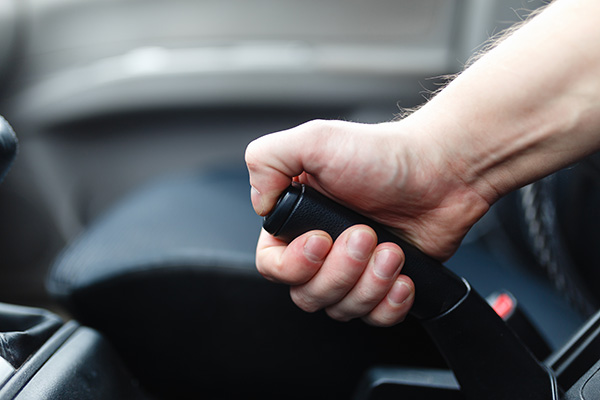
A parking brake should keep the vehicle from rolling after it is parked, especially on an incline. If you pull the lever, press the pedal, or activate the electronic parking brake and the car still moves, something in the system is no longer applying enough holding force.
The cause can be as simple as a stretched cable or as involved as worn rear brake components or an electronic actuator problem. Either way, a parking brake that will not hold deserves attention. The system is an important backup to the transmission’s Park position, and it should be able to secure the vehicle without relying entirely on the transmission parking mechanism.
1. The Parking Brake Cable Is Stretched or Damaged
Many mechanical parking brake systems use steel cables to connect the hand lever or foot pedal to the rear brakes. Every time the brake is applied, those cables are placed under tension. Over years of use, the cable can stretch slightly, reducing how far the brake mechanism moves when you operate the lever or pedal.
Corrosion can create another problem. Moisture and road salt can enter the cable housing and make the inner cable bind. A cable may move enough to apply the brake partially but not enough to create proper holding force. In severe cases, one side may work while the other side barely moves at all.
Signs of a cable-related problem can include:
- The parking brake lever travels much farther than it used to before resistance is felt
- The pedal reaches close to the floor without firmly holding the vehicle in place
- One rear wheel appears to hold while the opposite wheel still turns too easily
- The parking brake does not release completely after sitting in wet or freezing weather
- The lever or pedal suddenly feels unusually loose compared with its normal operation
Cable adjustment may correct excessive travel on some vehicles, but adjustment should not be used to hide worn brake shoes, seized hardware, or a damaged cable. The complete system needs to be checked first.
2. The Rear Brake Shoes or Pads Are Worn
The parking brake has to create friction somewhere at the rear wheels. On vehicles with rear drum brakes, the regular brake shoes often perform this job. On many vehicles with rear disc brakes, a separate set of small parking brake shoes sits inside the center section of the rotor. Other designs use the rear caliper itself.
As the friction material wears, the parking brake may need more movement before it can hold the vehicle. Drum-style parking brakes can also fall out of adjustment as the shoes wear. Oil, grease, brake fluid, or heavy corrosion on the friction surfaces can reduce holding ability even when plenty of material remains.
An inspection may reveal:
- Parking brake shoes worn close to their service limit or worn unevenly from side to side
- Rust or heavy scaling on the drum surface where the parking brake shoes make contact
- Contaminated friction material that cannot develop the grip needed to hold the vehicle
- Damaged springs, adjusters, clips, or other hardware that prevents full brake application
- Rear caliper components that do not move far enough when the parking brake is engaged
Simply tightening a cable will not restore friction material that is worn out or contaminated. The mechanical condition of the brakes has to be corrected before the system can be adjusted properly.
3. The Parking Brake Mechanism Is Seized or Out of Adjustment
Parking brakes contain several moving parts besides the cable. Levers, pivots, adjusters, springs, and caliper mechanisms can corrode or seize, particularly on vehicles where the parking brake is rarely used.
A seized lever at one rear wheel may keep that brake from applying fully. A frozen adjuster can allow excessive clearance between the shoe and drum, so much of the lever movement is used just taking up that gap. The brake may feel as if it is applied while very little clamping force actually reaches the wheel.
Regular maintenance helps because frequent parking brake use keeps many mechanical parts moving. A system that has not been operated for years can become difficult to free up safely. Technicians need to check movement at both rear wheels rather than assuming the problem is only at the lever or pedal.
4. The Electronic Parking Brake Has a Fault
Many newer vehicles use an electronic parking brake instead of a mechanical hand lever. Pressing a switch sends a command to electric motors that apply the rear brakes. Depending on the design, the motors may be attached to the calipers or connected to a separate parking brake mechanism.
Electronic systems can fail because of a weak battery, damaged wiring, a failed actuator, a seized caliper mechanism, a faulty switch, a control-module problem, or incorrect calibration after brake work. A warning on the dashboard may appear, but some faults first show up as weak holding force or a brake that works intermittently.
The system may also require a scan tool to place the rear brakes into service mode before pad replacement. If the actuators are forced backward without following the correct procedure, gears or electronic components can be damaged. After repairs, some vehicles require initialization or calibration before normal operation returns.
Why You Should Not Rely Only on Park
An automatic transmission’s Park position uses a small mechanical device called a parking pawl to lock part of the transmission. It is designed to hold the vehicle, but allowing the full weight of the car to rest against it on a hill can create a noticeable clunk when shifting out of Park.
Using the parking brake helps share that load. On a slope, apply the parking brake firmly and make sure the vehicle is secure before relying on the transmission alone. If the parking brake cannot hold the vehicle, have it repaired rather than treating Park as a permanent substitute.
How Technicians Find the Cause
Testing starts by checking how much lever or pedal travel is present and whether both rear brakes apply with similar force. Technicians then inspect the cables, friction material, hardware, adjusters, calipers, and electronic components where applicable.
The repair depends on what is actually preventing the brakes from holding. It may involve cable replacement, brake shoe adjustment, new friction material, hardware service, caliper repair, or electronic testing. Correcting the cause is more dependable than simply tightening the system until the lever feels firmer.
Get Parking Brake Repair in Belmont, CA, With 5 Star Auto Service
5 Star Auto Service in Belmont, CA, can check parking brake cables, rear brake shoes, calipers, hardware, adjusters, and electronic parking brake components.
If your vehicle rolls after the parking brake is applied or the lever or pedal feels different than it used to, contact us to schedule service.