When a clutch is working the way it should, you barely think about it. The pedal feels right, the gears engage smoothly, and the car responds the way you expect. When something starts going wrong, though, it becomes hard to ignore. Maybe the pedal feels soft. Maybe shifting gets harder. Maybe the engine revs climb, but the car does not move the way it should. Those little changes can turn driving from enjoyable to frustrating in a hurry.
At our shop, we know clutch problems can sneak up on drivers. Sometimes they start with one odd symptom that only shows up once in a while. Other times, the signs are obvious right away. Either way, the sooner a clutch issue gets checked out, the better. A small problem caught early can often save you from bigger repairs, extra wear, and more time off the road.
Manual transmission vehicles have a loyal following for a reason. They are engaging to drive, give drivers more control, and, when properly maintained, can be very dependable. But the clutch is a wear item, and like any part that works hard every time you drive, it can develop problems over time.
What The Clutch Actually Does
Before getting into the most common problems, it helps to understand what the clutch is responsible for. The clutch connects and disconnects the engine from the transmission. When you press the clutch pedal, the engine’s power is temporarily separated from the transmission so you can shift gears. When you release the pedal, the connection is restored, and power flows back to the wheels.
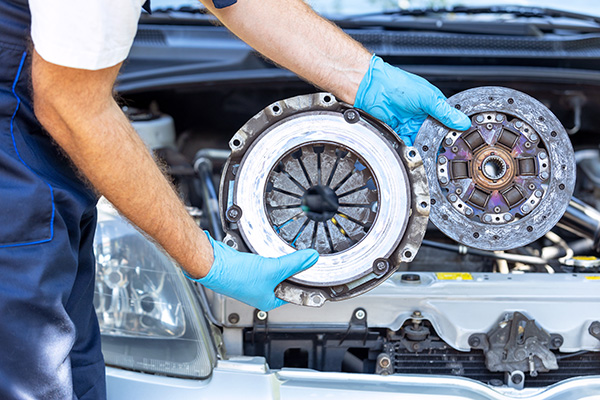
That may sound simple, but it involves several parts working together, including the clutch disc, pressure plate, flywheel, release bearing, and either a cable or hydraulic system, depending on the vehicle. If one part starts wearing out or failing, the whole system can start feeling off.
That is why clutch issues do not always come down to one single part. Sometimes the disc is worn. Sometimes there is a hydraulic issue. Sometimes the problem is related to the flywheel or release components. Proper diagnosis matters.
Clutch Slipping
One of the most common clutch problems we see is slipping. This happens when the clutch no longer holds power the way it should. Instead of fully transferring engine power to the transmission, it slips under load.
Drivers usually notice this when the engine revs go up, but the car does not accelerate as strongly as expected. It may be especially noticeable when going uphill, carrying extra weight, or trying to accelerate quickly.
Common signs of clutch slipping include:
- Engine RPM rising without matching acceleration
- A burning smell after driving
- Trouble maintaining power under load
- A clutch pedal that engages very high off the floor
In many cases, slipping points to a worn clutch disc, but it can also involve pressure plate wear or contamination from leaks. When we inspect a slipping clutch, we do not just assume one part is to blame. We look at the condition of the full system so we can recommend the right repair, not just a guess.
Hard Shifting Or Grinding Gears
Another common complaint is difficulty shifting. If the clutch is not fully disengaging when you press the pedal, the transmission may resist going into gear. Some drivers describe it as notchy shifting. Others notice grinding, especially when trying to get into reverse or first gear.
This can happen for a few different reasons. Sometimes the clutch itself is worn. Other times, the hydraulic system is not generating enough pressure, or air has gotten into the system. In some vehicles, worn linkage or cable issues can also play a role.
When a vehicle comes into our shop with hard shifting, we check more than just the transmission. Many times, the clutch system is the real source of the problem.
A Soft, Spongy, Or Stiff Clutch Pedal
The way the clutch pedal feels can tell you a lot. A pedal that suddenly feels soft or spongy may point to a hydraulic problem, such as a failing master cylinder, slave cylinder, or fluid leak. A pedal that feels unusually stiff may suggest mechanical wear or pressure plate trouble.
These changes matter because they often affect how consistently the clutch engages and disengages. Even if the vehicle is still drivable, a pedal that does not feel normal is worth paying attention to.
We usually tell customers to trust their instincts here. If the pedal feels different from how it used to, there is a reason. Many clutch problems begin with changes in feel before they become major drivability issues.
Clutch Drag
Clutch drag is the opposite of slipping in some ways. Instead of failing to hold power, the clutch does not fully release when the pedal is pressed. That means the engine is still trying to drive the transmission a little, even though you are trying to shift.
This can make the car harder to get into gear and can lead to grinding. It may also make the vehicle want to creep slightly when stopped with the clutch pedal pressed down.
Clutch drag can be caused by worn or damaged clutch parts, incorrect adjustment, or hydraulic issues. It is one of those problems that may sound small at first, but can lead to extra wear on transmission components if ignored too long.
Noisy Clutch Components
Unusual noises are another common warning sign. A squealing, chirping, rattling, or growling sound when pressing or releasing the clutch pedal can point to worn bearings or other clutch hardware.
A few examples:
- Noise when pressing the pedal may point to a worn release bearing
- Rattling or vibration may suggest worn clutch components or flywheel issues
- Grinding or harsh sounds during shifting may indicate incomplete disengagement
Not every clutch noise means the exact same repair is needed, which is why it is important to inspect the system instead of trying to diagnose it based only on sound. In our shop, we look at the full picture, including pedal feel, engagement behavior, and how the vehicle drives, so we can pinpoint the real issue.
Clutch Chatter Or Vibration
Some drivers notice shuddering or vibration when taking off from a stop. That is often described as clutch chatter. Instead of engaging smoothly, the clutch grabs unevenly, which can make the car shake or vibrate during takeoff.
This can happen because of worn clutch surfaces, flywheel hot spots, contamination, or installation-related issues from past repairs. It can also become more obvious as parts age.
A chattering clutch is not just annoying. It usually means something in the clutch system is no longer operating smoothly, and it is best handled before more wear develops.
What Causes Clutch Problems In The First Place?
Some clutch wear is simply part of normal vehicle life. The clutch is designed to wear over time, especially in stop-and-go driving. But usage habits and other issues can speed up that wear.
A few common causes include:
We are not here to lecture drivers about how they drive. Our job is to figure out what happened, what the clutch system needs now, and how to help prevent the same problem from coming back too soon.
How We Fix Clutch Problems
The first step is proper diagnosis. Clutch issues can overlap, and several different failures can create similar symptoms. That is why we begin with a careful inspection and testing process. We listen to what the vehicle is doing, check pedal feel, inspect for leaks, and evaluate how the clutch engages and disengages.
Depending on what we find, repairs may include:
- Replacing a worn clutch disc and pressure plate
- Resurfacing or replacing the flywheel
- Replacing a release bearing
- Repairing hydraulic components like the master or slave cylinder
- Fixing leaks that contaminated the clutch
- Adjusting related components where applicable
In many cases, if the transmission has to come out, it makes sense to address all major worn components at once rather than replace only one part and risk more labor later. We explain those options clearly so you know what we recommend and why.
Why Early Repair Matters
A lot of people keep driving with a clutch problem because the vehicle still moves, and they hope it can be fixed on its own. We understand that. But clutch issues tend to get worse, not better. A slipping clutch can leave you stranded. A dragging clutch can add wear to transmission synchronizers and make shifting more difficult. A hydraulic leak can suddenly get much worse.
Taking care of the issue early often means more control over the repair process. It can help you avoid being stuck somewhere unexpected and can sometimes reduce how much secondary damage occurs.
Even when the repair is straightforward, waiting usually does not make it cheaper.
Clutch Repair at 5 Star Auto Service
Whether your clutch is slipping, chattering, making noise, or becoming harder to use, we want to help you fix it before it turns into a bigger headache. If your vehicle is showing signs of clutch trouble, bring it to 5 Star Auto Service in Belmont, CA. Call us today or stop by to schedule a clutch inspection.