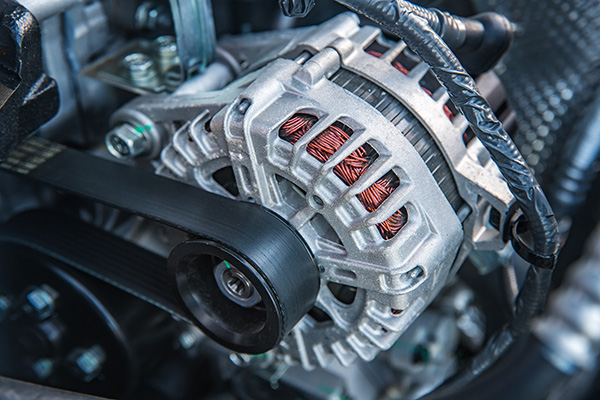
You drive regularly, yet the battery keeps struggling to start the car. It may seem confusing: shouldn't every trip replace the energy used during starting? That depends on whether the charging system can supply enough power under the conditions the vehicle experiences.
When an alternator or its related circuit cannot charge the battery properly, the battery can gradually lose its reserve. The first symptom might be an inconvenient slow start. Later, warning messages and electrical failures can appear while driving. Finding the cause helps protect both the replacement battery and the one already installed.
The Alternator Has to Support More Than Battery Charging
With the engine running, the electrical system supplies lights, control modules, fans, and other equipment while also managing the battery's charge. The alternator's contribution depends on its design, operating speed, controls, and the loads present.
If available charging power is inadequate, the battery may supply part of the difference. A brief change in charging behavior can be normal on a controlled system, but an ongoing shortfall can leave the battery progressively lower. Testing should match the pattern: the shop needs to know whether the concern occurs at idle, during ordinary driving, or only when particular accessories operate.
An Undercharged Battery Can Still Start for a While
A battery does not necessarily go from healthy to completely dead in one trip. It can provide enough power for several starts while losing the margin that made starting dependable. That gradual change can hide a charging fault until the car sits overnight or the weather becomes cooler.
You might first notice slower cranking or a need for a jump after parking. Those symptoms can also result from battery wear or excessive electrical use while the engine is off. Charging-system testing helps establish whether the battery has been receiving the energy it should, rather than treating every weak start as a separate battery failure.
Repeated Low Charge Can Shorten Battery Life
Starting batteries are intended to deliver brief bursts of power and remain appropriately charged. Repeatedly leaving a lead-acid battery at low charge can contribute to deterioration, including sulfate buildup that affects useful capacity. The outcome depends on how deeply and how often it is discharged.
That means a charging fault can eventually create a battery problem too. Repairing the alternator does not automatically restore capacity the battery has already lost. After you correct the supply issue, charge and evaluate the battery using an appropriate procedure. Some batteries recover adequately; others show damage or insufficient starting capability and need replacement.
Weak Alternator Charging Can Disrupt Vehicle Electronics
Control modules depend on an electrical supply within their operating requirements. As voltage becomes unsuitable, different systems can report faults or behave unpredictably. Multiple warning messages may therefore come from a shared supply problem rather than several unrelated component failures.
Lights may change, the blower may behave differently, or the engine may eventually run poorly. Those signs need prompt attention, especially with a charging warning. Follow the owner's manual and stop safely when the vehicle loses essential functions. The car can only run on stored battery energy for a limited period when adequate charging is unavailable.
The Alternator Is Only One Part of the Charging Circuit
Poor charging can involve the alternator itself, but also its belt drive, cables, connections, ground paths, fuses, or controls. On some vehicles, a battery-management sensor or incorrect battery installation can affect operation. The exact arrangement determines which checks apply.
For example, an alternator may produce suitable output at its terminal while a damaged connection causes a loss before that energy reaches the battery. Replacing the alternator would leave that restriction in place. Measurements should identify where the system falls short and connect the finding to a repair, including any related hardware that also needs attention.
Modern Charging Systems Need Model-Specific Testing
Many newer vehicles vary alternator output intentionally. Battery condition and electrical demand can change the requested voltage, so a single reading compared with a generic number can be misleading. Testing needs the manufacturer's specifications and the relevant operating conditions.
The inspection may compare control information, battery condition, output under load, and voltage loss through the charging path. It should also consider the driving pattern. Repeated very short trips can leave limited time for recovery even without a failed alternator. The distinction helps explain whether the vehicle needs a repair, a battery, or changes to how its charge is maintained.
Bring These Details to an Alternator Charging Check
These five observations help us understand an incomplete-charge complaint.
- When the car last started normally and how the behavior changed.
- Whether a charging warning appears with the engine running.
- Whether headlights, climate controls, or other accessories behave differently.
- Whether the battery has recently been replaced or repeatedly jump-started.
- How long the usual trips last and how often the vehicle sits unused.
Mention any additional electrical equipment as well. Added loads can change the demands on a system, and installation problems can create other concerns. A written history is especially helpful if the fault comes and goes, because the vehicle may appear normal during a short shop inspection.
Verify Battery Recovery After the Charging Repair
A complete repair should address the confirmed cause and then check the result. Depending on the vehicle, that can include testing with electrical loads operating, confirming the battery's condition, and reviewing warning information after the required procedures.
Keep the repair record and watch for returning symptoms. If the car still struggles after overnight parking despite correct charging, a parked electrical drain or a separate starting concern may need investigation. The aim is dependable operation across your normal routine, with a clear explanation of what the charging repair corrected and whether anything else remains to be checked.
Schedule Alternator Service in Belmont, CA
5 Star Auto Service in Belmont, CA, can check recurring low battery charge and related alternator, circuit, or starting concerns. Share the symptoms and recent battery history so we can discuss the appropriate tests and repair findings.
Contact us to schedule a charging-system inspection for your vehicle.